
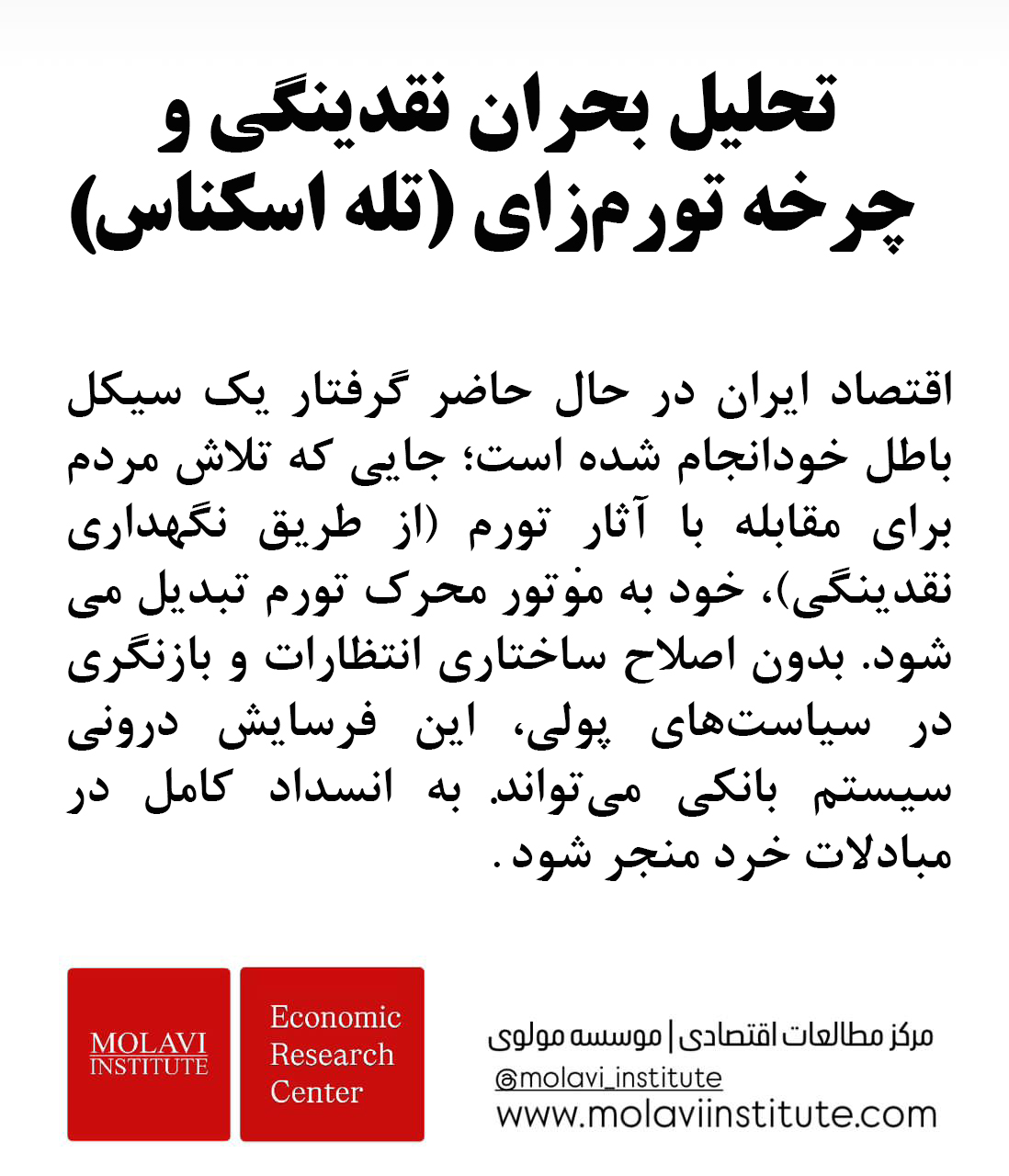
تحلیل بحران نقدینگی و چرخه تورمزای «تله اسکناس»
پیمان مولوی
مرکز مطالعات اقتصادی | موسسه مولوی
وضعیت معیشتی و شاخصهای کلان اقتصادی در شرایط فعلی، نشاندهنده یک «سقوط آزاد» در ارزش پول ملی است که اکنون آثار خود را در قالب بحران کمبود اسکناس نمایان کرده است. تلاقی موج فزاینده تورم، نااطمینانیهای سیستماتیک و افت قدرت خرید، موجب جهش تقاضا برای وجوه نقد شده است؛ پدیدهای که ریشه در تلاش شهروندان برای حفظ نقدینگی در برابر ناپایداریهای محیطی دارد.
۱. تحلیل آماری؛ جهش تقاضای نقدینگی
طبق دادههای رسمی بانک مرکزی، حجم «اسکناس و مسکوک در دست اشخاص» در هشتماهه نخست سال جاری با رشدی ۲۳ درصدی مواجه شده است. مقایسه این رقم با رشد ۰.۸ درصدی در مدت مشابه سال گذشته، نشاندهنده تغییر رفتار تودهای مردم و خروج سرمایه از سیستم بانکی به سمت داراییهای نقد است. همچنین، پایداری تقاضا در سطح بالا حتی پس از تنشهای نظامی اخیر، حاکی از تثبیت انتظارات تورمی در بدنه جامعه است.
۲. استیصال شبکه بانکی و محدودیتهای عملیاتی
گزارشهای میدانی حاکی از آن است که بانکها به صورت غیررسمی، سقف پرداخت نقدی را به ۳ تا ۵ میلیون تومان تقلیل دادهاند. فرسودگی چرخه توزیع نقدینگی باعث شده است:
• منابع نقدی شعب در ساعات اولیه روز به اتمام برسد.
• سقف برداشت از خودپردازها در رقم ناچیز ۳۰۰ هزار تومان منجمد بماند.
• عدم تناسب درشتترین اسکناس موجود (ایرانچک ۲۰۰ هزار تومانی) با هزینههای روزمره، عملاً کارکرد پول نقد را در معاملات خرد مختل کند.
۳. ورود به سیکل خودویرانگر (Self-Fulfilling Cycle)
آنچه از منظر اقتصاد سیاسی نگرانکننده است، شکلگیری یک مارپیچ مخرب است. افزایش برداشتهای نقدی، منجر به «تخلیه ذخایر بانکها» در بازار بینبانکی شده و آنها را ناگزیر به اضافه برداشت از بانک مرکزی میکند. این اقدام مستقیماً پایه پولی را منبسط کرده و به موج جدیدی از تورم دامن میزند.
نتیجهگیری راهبردی:
اقتصاد ایران در حال حاضر گرفتار یک سیکل باطل خودانجام شده است؛ جایی که تلاش مردم برای مقابله با آثار تورم (از طریق نگهداری نقدینگی)، خود به موتور محرک تورم تبدیل میشود. بدون اصلاح ساختاری انتظارات و بازنگری در سیاستهای پولی، این فرسایش درونی سیستم بانکی میتواند به انسداد کامل در مبادلات خرد منجر شود.
-----------------------------------------------------------------------------------------------------------------------------------------------------------
Analysis of the liquidity crisis and the inflationary cycle of the “banknote trap”
Peyman Molavi
Center for Economic Studies | Molavi Institute
The current living conditions and macroeconomic indicators indicate a “free fall” in the value of the national currency, which has now manifested itself in the form of a banknote shortage crisis. The convergence of the increasing wave of inflation, systematic uncertainties, and a decline in purchasing power has caused a surge in demand for cash; a phenomenon that has its roots in citizens’ efforts to maintain liquidity in the face of environmental instability.
1. Statistical analysis; A surge in demand for liquidity
According to official data from the Central Bank, the volume of “banknotes and coins in the hands of individuals” has grown by 23 percent in the first eight months of this year. Comparing this figure with the 0.8 percent growth in the same period last year indicates a change in mass behavior of the people and the outflow of capital from the banking system towards cash assets. Also, the persistence of high demand even after the recent military tensions indicates that inflationary expectations have stabilized in society.
2. Desperation of the banking network and operational constraints
Field reports indicate that banks have unofficially reduced the cash payment ceiling to 3 to 5 million Tomans. The exhaustion of the liquidity distribution cycle has caused:
• Branches’ cash resources to run out in the early hours of the day.
• ATM withdrawal ceilings to remain frozen at a paltry 300,000 Tomans.
• The incompatibility of the largest banknote available (the 200,000 Toman Iranchek) with everyday expenses has practically disrupted the functioning of cash in retail transactions.
3. Entering a Self-Fulfilling Cycle
What is worrying from a political economy perspective is the formation of a destructive spiral. The increase in cash withdrawals leads to a “depletion of banks’ reserves” in the interbank market, forcing them to overdraw from the central bank. This directly expands the monetary base and fuels a new wave of inflation.
Strategic Conclusion:
The Iranian economy is currently caught in a self-perpetuating vicious cycle, where people’s efforts to combat the effects of inflation (by holding liquidity) become the engine driving inflation. Without structural reform of expectations and a review of monetary policies, this internal erosion of the banking system could lead to a complete blockage of retail transactions.